



For Latest-Generation BMW ECUs, Is Early Support or a Stable Workflow More Important?




Seeing an ECU in a protocol list is not enough to justify an equipment investment. When a customer’s BMW is in the workshop, technicians need to know exactly what can be done, which connection mode is required and where support is available if an issue occurs.
Being first is an advantage, but it is not the whole story
Update speed naturally attracts attention in the tuning-tool market. Early coverage helps a workshop reach new vehicles sooner and creates additional business opportunities. On a high-value, latest-generation ECU, however, speed only becomes useful when it is supported by a workflow that technicians can apply confidently in real workshop conditions.
Before accepting a vehicle, the workshop should be able to answer practical questions: Is the ECU identification exact? Which OBD, BENCH or BOOT mode is available? Is reading real or virtual? Are writing and cloning supported? Which activation is required, and is the subscription active? These details separate a protocol-list entry from a service that can actually be delivered.
What should “stability” mean in practice?
Stability should never be interpreted as a promise that reprogramming can never fail. Real-world risk also depends on ECU condition, the vehicle electrical system, the power supply, connections, the computer and technician actions. A strong solution helps control these variables through clear compatibility information, guided procedures and access to technical support.
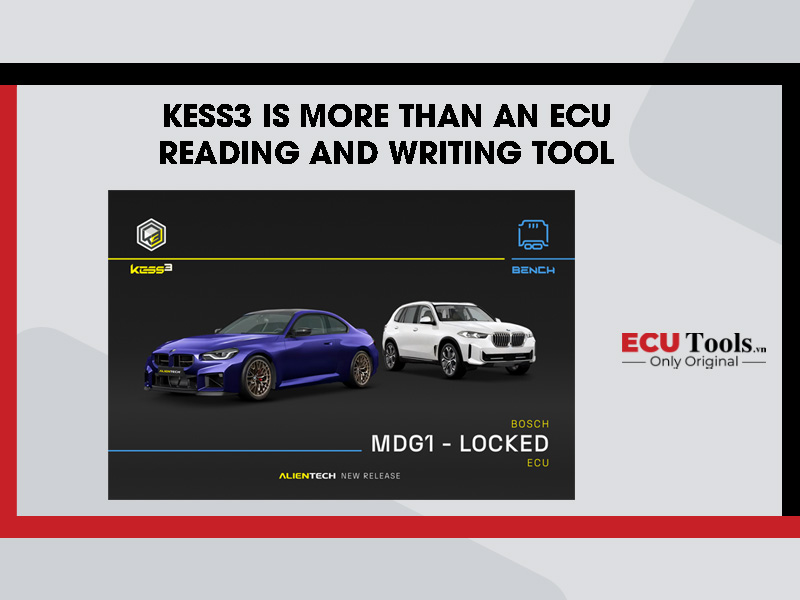
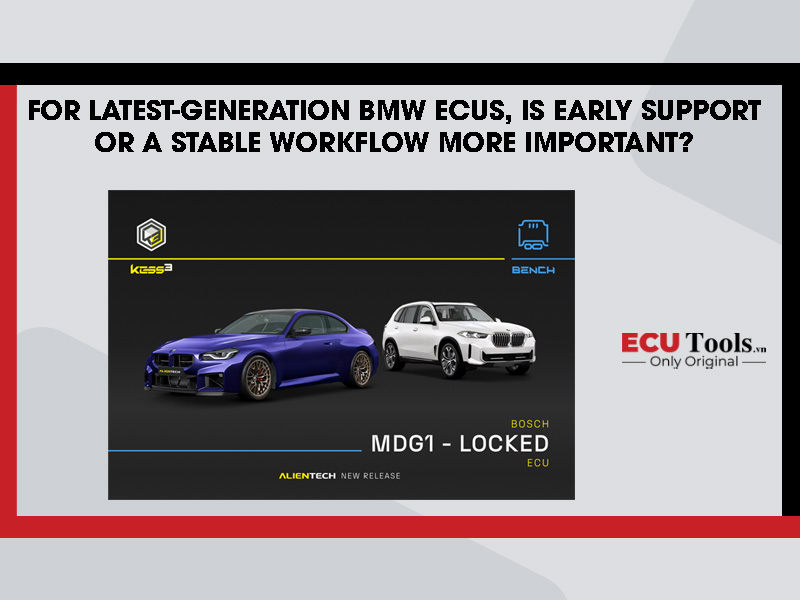
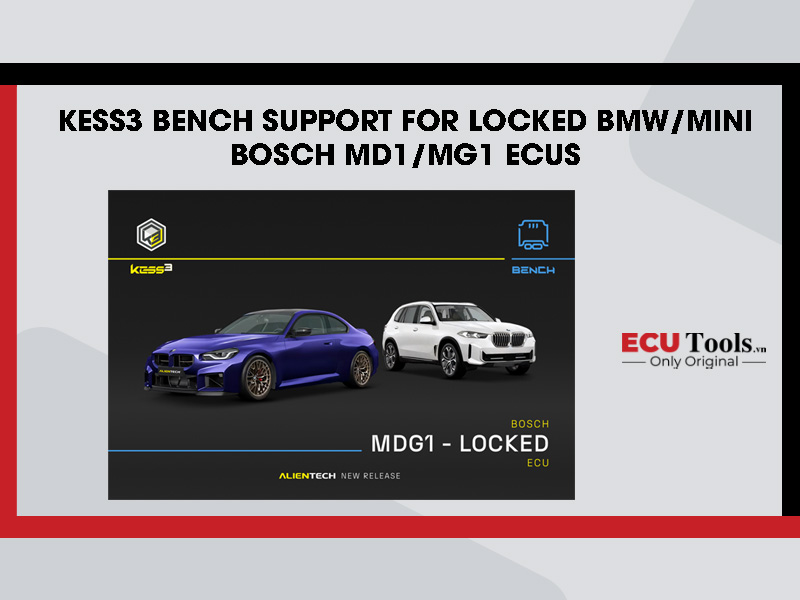
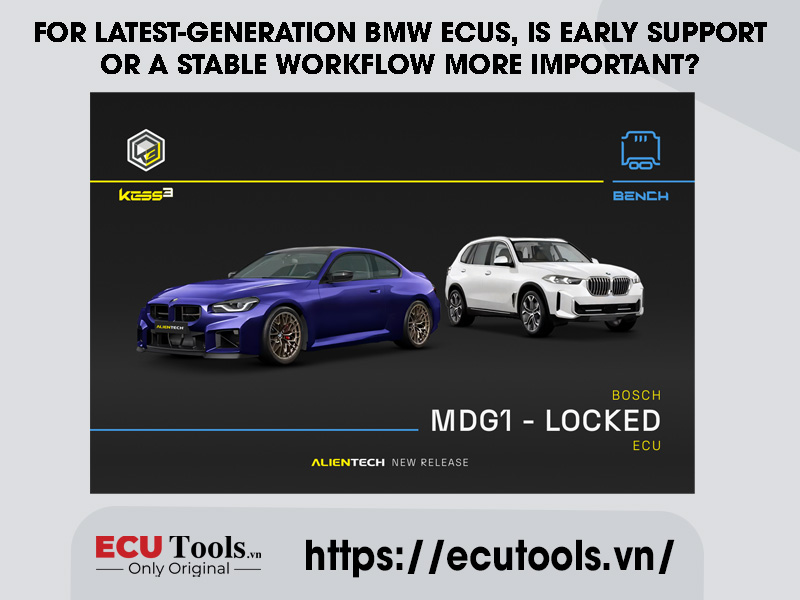
Alientech lists Stability among its core values. In Upgrade 3.44, KESS3 accesses locked Bosch MDG1 ECUs on BMW and MINI vehicles directly through the ECU connector in BENCH mode without opening the unit. Alientech describes this approach as less complex and operationally safer than more invasive procedures.
Five checks before choosing a tool
- Real application coverage: verify make, model, engine, production year and exact ECU identification.
- Connection mode: confirm whether the job uses OBD, BENCH or BOOT and whether the ECU must be opened.
- Available operations: distinguish reading, writing, cloning, DTC and any protocol-specific functions.
- Continuity of the platform: review updates, subscriptions, manuals and file-management options.
- After-sales support: choose a source that can advise on activations, compatibility and real technical cases.
The right choice must fit the workshop’s business model
A European-vehicle specialist has different requirements from a multi-brand workshop. A tuner developing files independently needs a different configuration from a Slave user receiving files from a trusted Master. The tool decision should therefore not be based on one new protocol or a short comparison chart. Start with target vehicles, expected job volume, file-development capability and the level of technical support required.
Fast support is valuable on new ECUs. The ability to verify the exact application, follow the correct procedure and access support when needed is what turns an update into a sustainable workshop service.
Whatsapp: +84.899.402.402
Facebook: ECUTools.vn
Youtube: ECUTools Vietnam
Tiktok: ECUTools Vietnam
Website: ECUTools.vn
RELATED NEWS
See all